SimBayLab is reader-supported. When you buy through links on this page, we may earn a commission at no extra cost to you. We don't test products hands-on: our picks are based on manufacturer specs, published tests and owner reports. How we research.
This guide explains how launch monitors work and how to match one to your sim bay. Products appear only as examples, with prices at the time of writing (November 25, 2026). For a ranked list, see our top 10 golf launch monitors by score.
Quick Answer
- Short room: look at units that sit beside the ball or hang overhead. Behind-the-ball units often need 14 to 16 ft of depth indoors.
- Spin: check whether the maker says spin is measured, and which ball or sticker it needs indoors.
- Club data: club path and face angle are often missing, estimated or sold as an add-on at lower prices.
- Software: pick your app first. GSPro costs $250 per year and runs on Windows only.
- Budget: add three years of membership fees to the hardware price before you compare.
What Is a Launch Monitor and How Does It Work?
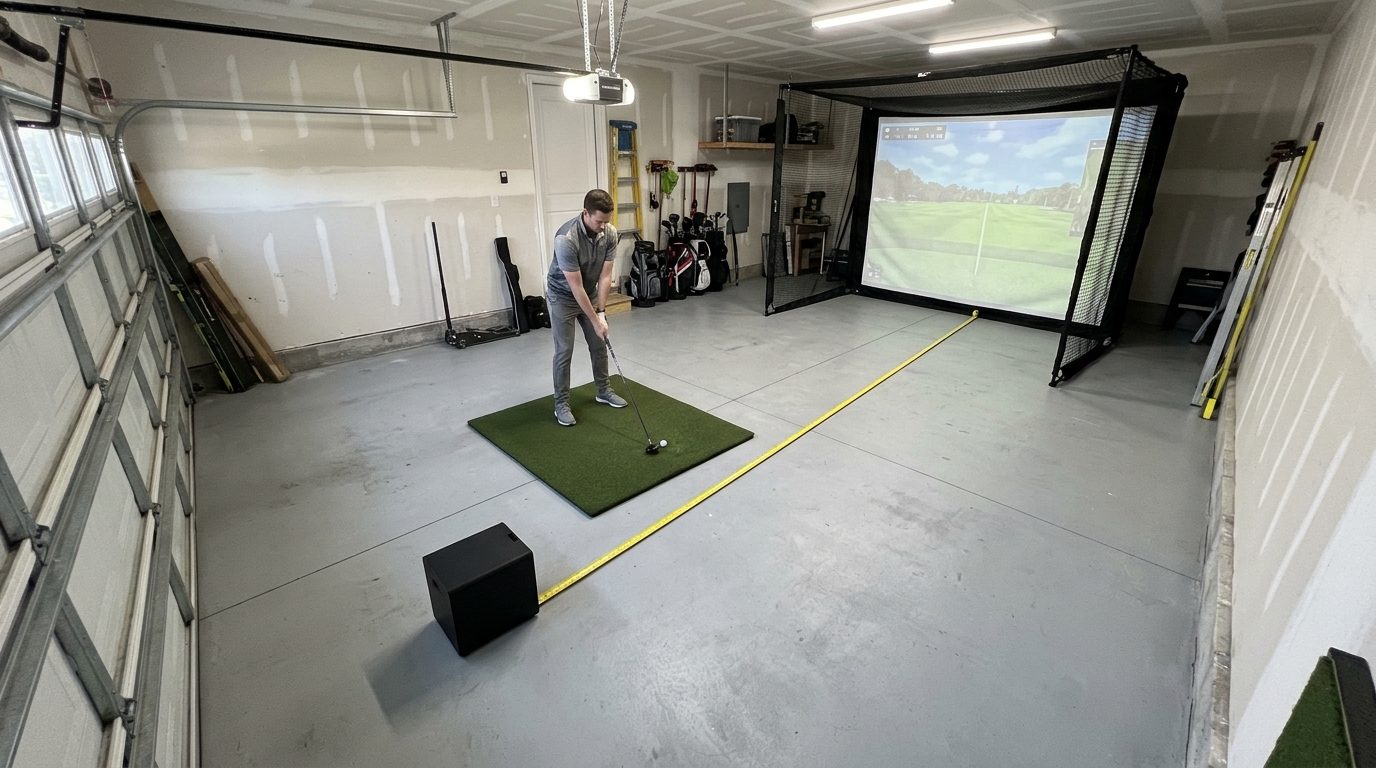
A launch monitor is a device that measures the ball, and often the club, at and just after impact. Its software then turns those numbers into a ball flight: carry, total, apex and side carry.
There are two ways to read the ball: Doppler radar follows the ball as it flies, so the unit sits behind you and needs room for the flight. Photometric (camera) units take high-speed images of the ball at impact, so they can sit beside or above it. Hybrid units combine both.
Not every number on the screen is measured. Rapsodo, for example, lists ball speed, launch angle, club speed and club path as measured on the MLM2XPRO, while smash factor, carry, total, apex and descent angle are calculated.
Radar vs Camera Launch Monitor: Tracking and Placement
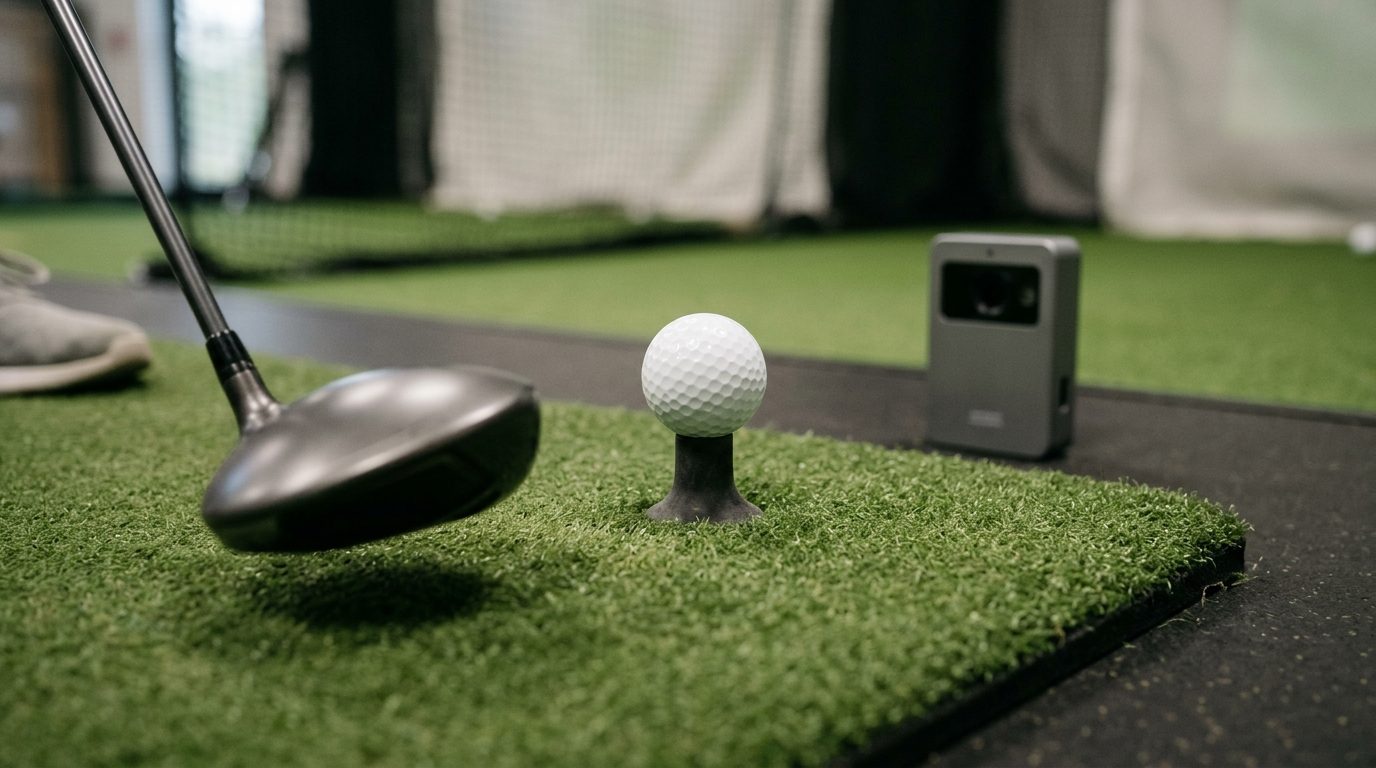
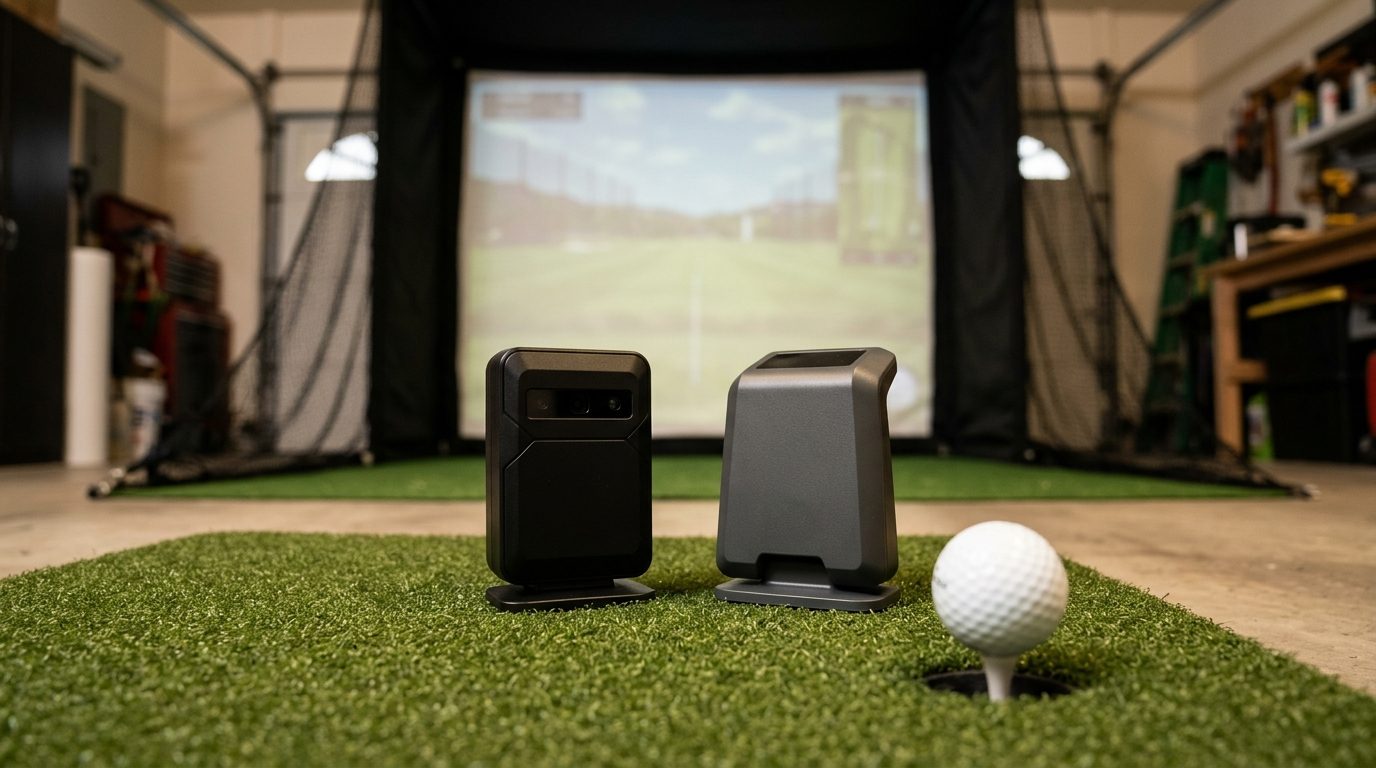
Placement matters more for your room than the label. Here is how real units at different prices sit and how much depth their makers ask for.
Example: Garmin R10 · Price (regular / sale): $499.99 / $399.99 · Tracking: Radar · Placement: Behind ball · Indoor depth (maker): About 14 ft (our sum) · Yearly plan: $99.99 for courses
Example: MLM2XPRO · Price (regular / sale): $899.99 / none · Tracking: Hybrid · Placement: Behind ball · Indoor depth (maker): A little over 15 ft · Yearly plan: $199.99 (Core)
Example: Mevo Gen2 · Price (regular / sale): $1,299 / $1,149 · Tracking: Hybrid · Placement: Behind ball · Indoor depth (maker): About 16 ft (our sum) · Yearly plan: $0 required
Example: SkyTrak ST MAX · Price (regular / sale): $2,995 / $1,695 · Tracking: Hybrid · Placement: Beside ball · Indoor depth (maker): 10 ft x 10 ft area · Yearly plan: $99.99 to $599.99
Example: Garmin R50 · Price (regular / sale): $4,999.99 / $4,499.99 · Tracking: Camera (3) · Placement: Beside ball · Indoor depth (maker): Not published · Yearly plan: $99.99 for courses
Example: Foresight GC3 · Price (regular / sale): $6,999 / $3,999 · Tracking: Camera (3) · Placement: Beside ball · Indoor depth (maker): Not published · Yearly plan: $0 to $599
Example: TrackMan iO · Price (regular / sale): From $13,995 · Tracking: Hybrid · Placement: Ceiling · Indoor depth (maker): No minimum stated · Yearly plan: $700 (year 1 included)
Radar: Behind the Ball, Needs Depth
Radar units track the ball in flight with Doppler radar, so they sit behind you. The Garmin Approach R10 ($499.99 regular, $399.99 on sale) sits 6 to 8 ft behind the tee, and Garmin wants at least 8 ft from the tee to the net. That is about 14 ft of depth by our math.
Radar is the cheapest way in and works outdoors too. The R10 lists 14 data points, including club path, face angle, spin rate and spin axis, but Garmin does not say whether spin is measured or calculated. Compare more units on our radar launch monitors page.
Camera (Photometric): Beside the Ball, Saves Depth
Camera units read the ball at impact, so they need little depth. The Garmin Approach R50 ($4,999.99 regular, $4,499.99 on sale) uses three high-speed cameras and sits about 1.5 ft to the side of the tee. Its 10-inch touchscreen runs Home Tee Hero without a PC, and an HDMI port feeds a projector.
The Foresight Sports GC3 ($6,999 regular, $3,999 on sale) is also a three-camera unit beside the ball. A side unit must face the ball, so lefties and righties in one house will move it, and some need club stickers for club data. See our photometric launch monitors page for more.
Hybrid: Radar Plus Cameras, Placement Varies
Hybrids sit wherever the maker designed them. The FlightScope Mevo Gen2 asks for 8 ft from the unit to the tee and 8 ft of ball flight, about 16 ft in total. The Rapsodo MLM2XPRO sits 7.5 ft behind the ball and needs "a little more than 15 feet in total".
The SkyTrak ST MAX "sits beside the ball, not behind you", and its user guide gives a minimum area of 10 ft by 10 ft. The TrackMan iO mounts on the ceiling, is indoor only, and states "no minimum distance requirements in front of or behind the ball". Browse hybrid launch monitors to compare.
How to Choose a Golf Launch Monitor for Your Room Depth
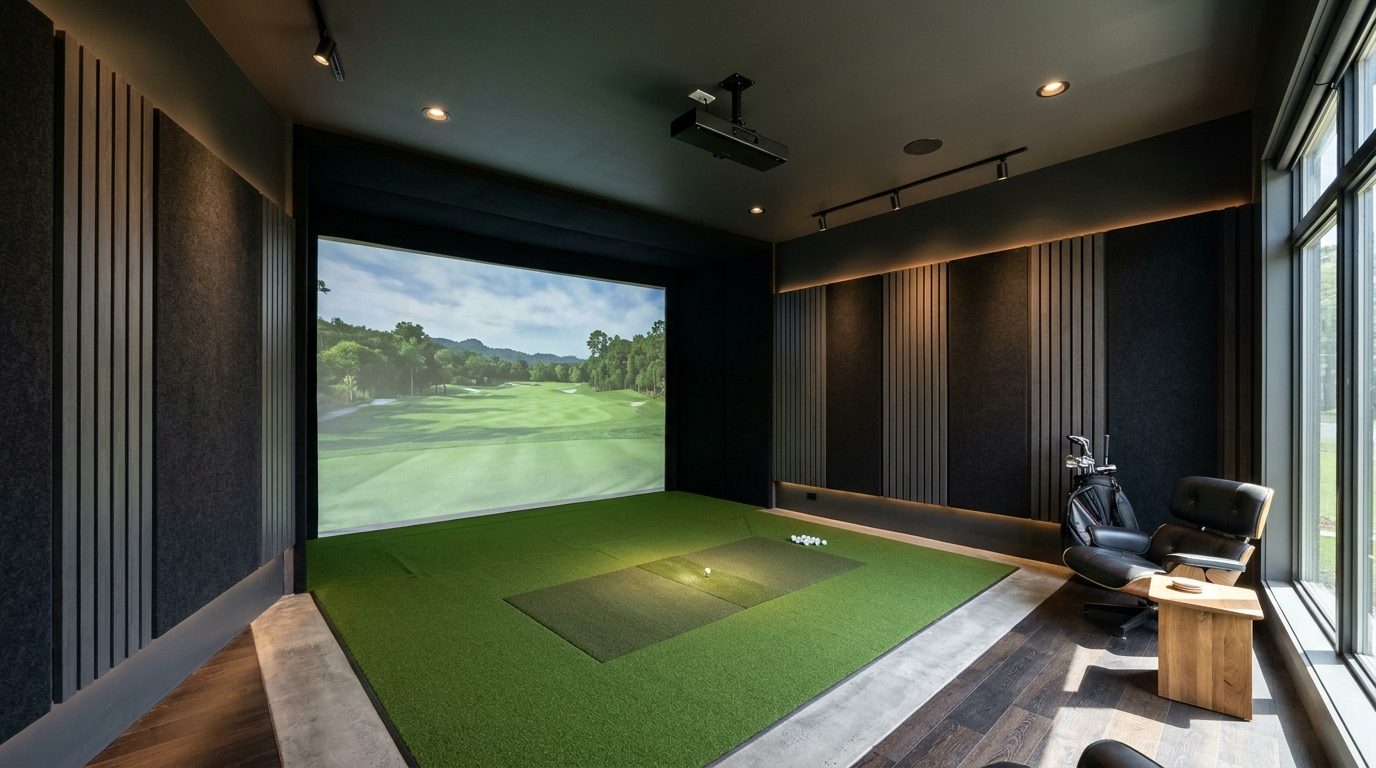
Measure from the back wall to where your screen will hang. Behind-the-ball units need about 14 to 16 ft or more, based on the makers' placement figures, while side and overhead units work in shorter rooms.
Leave safe space in front, too. Carl's Place, a screen maker, tells golfers to stand 10 to 12 ft from an impact screen to limit bounce-back. For ceilings, TrackMan's room guide suggests 10 ft for the iO, and SkyTrak says the ST MAX ceiling depends on your height and club.
Our golf simulator room dimensions guide has the full floor plan math. To see how a launch monitor fits with the screen, mat and projector, read our home golf simulator setup guide.
Measured vs Calculated Spin and Club Data
Spin drives carry and curve, so check how each maker gets it. Wording varies a lot between brands.
- Rapsodo MLM2XPRO: spin rate and spin axis are measured "with an RPT ball". Rapsodo includes a free dozen with the unit at the time of writing.
- FlightScope Mevo Gen2: FlightScope claims "no calculated estimates". Accurate indoor spin needs the included aluminum stickers or Titleist RCT balls.
- Garmin R50: Garmin says it takes "direct measurements" of ball speed, launch angle, spin rate and spin axis.
- TrackMan iO: TrackMan says it gives "measured 3D spin and spin axis" with no club stickers.
- Garmin R10: Garmin does not say whether spin is measured or calculated.
Club data varies just as much. The R50 needs one of the included stickers on the clubface for club data.
On the Mevo Gen2, club path and face angle come with the Pro Package, $1,000 regular and $599 on sale. The ST MAX lists club path, face angle, face-to-path and smash factor with no club stickers.
No independent lab has ranked all these units on the same test. Look for brands that say what they measure and what they calculate.
Indoor vs Outdoor Use
All seven example units work indoors, and all but the TrackMan iO also work outside. If you want range sessions as well as a sim bay, rule out indoor-only units before you compare data.
For a garage bay, check each maker's operating temperature range. Foresight warns that cold nights followed by warm days can cause condensation inside hardware, so a dehumidifier helps.
Subscriptions and Software
Decide which app you want before you pick hardware. Course play and third-party apps often sit behind a membership, at the time of writing:
- Garmin Golf: $99.99 per year or $9.99 per month on the US App Store, needed for Home Tee Hero on the R10 and R50. TruGolf's E6 page lists both as compatible.
- Rapsodo: Core is $199.99 per year (billed yearly only) and unlocks courses and third-party apps such as GSPro and E6. Studios is $399.99.
- FlightScope: FlightScope says the Mevo Gen2 has "$0 recurring fees" and includes 8 E6 Connect courses.
- SkyTrak: $99.99 (Essential) to $599.99 (Elite) per year. No SkyTrak page we checked states GSPro or E6 support for the ST MAX.
- Foresight+: Silver is $199 per year and Gold is $599, and GSPro runs only for Gold members.
- TrackMan: iO Home software costs $700 per year, with the first year included.
GSPro itself costs $250 per year and runs only on a Windows PC. Our golf simulator software guide lists which launch monitors each app supports.
Here is our estimate of three years of the brand plan you need for course play, at regular prices.
Model: Garmin R10 · Regular price: $499.99 · 3 years of membership: $299.97 · 3-year total (our estimate): $799.96
Model: Rapsodo MLM2XPRO · Regular price: $899.99 · 3 years of membership: $599.97 (Core) · 3-year total (our estimate): $1,499.96
Model: FlightScope Mevo Gen2 · Regular price: $1,299 · 3 years of membership: $0 · 3-year total (our estimate): $1,299
Model: Garmin R50 · Regular price: $4,999.99 · 3 years of membership: $299.97 · 3-year total (our estimate): $5,299.96
Model: Foresight GC3 · Regular price: $6,999 · 3 years of membership: $597 (Silver) · 3-year total (our estimate): $7,596
Add $750 if you plan to run GSPro. Sale prices this week lower the hardware column for every model here except the MLM2XPRO. Through 12/31/26, Foresight also adds a year of Silver with Course Pass to the GC3.
What Each Budget Level Gets You
Under $1,000
Expect a unit behind the ball, a phone app and a yearly plan for courses, as with the R10, the MLM2XPRO and Rapsodo's older MLM2PRO. Our guide on whether cheap launch monitors are worth it covers the trade-offs, and our Garmin R10 vs Rapsodo MLM2PRO comparison goes deeper. Compare current options on our launch monitors under $1,000 page.
$1,000 to $3,000
This range brings hybrid tracking. The Mevo Gen2 has no required subscription, and the ST MAX moves beside the ball. See our launch monitors from $1,000 to $3,000.
$3,000 to $7,000
Here you reach three-camera units like the R50 and GC3. SkyTrak also added the ST PRO ($4,995) to its store on November 22, 2026, and we haven't seen published tests of it yet. Compare launch monitors from $3,000 to $7,000.
Over $7,000
This is dedicated-room territory, such as the ceiling-mounted TrackMan iO from $13,995. See launch monitors over $7,000.
Published reviews can help you narrow down within a level. Golf.com wrote that the R50 "is perhaps the best unit on the market in terms of accuracy and ease of use in its price range," and Golf Monthly called the GC3's accuracy "best-in-class". Golf.com also said of the Mevo Gen2 that "you're going to get outsized value from the Gen2 without needing to get yourself a professional grade unit."
FAQ
What is a launch monitor?
A launch monitor is a device that measures the ball, and often the club, at and just after impact. It reports numbers such as ball speed, launch angle and spin, then its software calculates carry, total and ball flight. Paired with a screen and simulator software, it turns a room into a sim bay.
How do launch monitors work?
Radar units use Doppler radar to follow the ball in flight from behind you, while camera, or photometric, units take high-speed images of the ball at impact from beside or above it. Hybrids combine both, and some numbers are measured and others calculated. Good makers say which.
Is a radar or camera launch monitor better indoors?
Camera units usually suit indoor rooms better because they read the ball at impact and sit beside or above it. Radar units sit behind you and need more depth, often 14 ft or more. Hybrid units mix both, so check where each one sits and how much room its maker asks for.
How much room do I need for a launch monitor?
Behind-the-ball units need about 14 to 16 ft of depth, based on the makers' own placement figures. SkyTrak lists a 10 ft by 10 ft area for the ST MAX. Ceiling-mounted units such as the TrackMan iO need a high ceiling, around 10 ft per TrackMan's room guide.
Do golf launch monitors need a subscription?
Many do for course play: Garmin Golf is $99.99 per year, Rapsodo Core is $199.99, and Foresight+ Silver is $199. FlightScope says the Mevo Gen2 needs no subscription. Third-party apps such as GSPro ($250 per year) cost extra on top of any brand plan.
Models mentioned in this article
Also compare: Photometric (camera) launch monitors · Launch monitors $3,000 to $7,000