SimBayLab is reader-supported. When you buy through links on this page, we may earn a commission at no extra cost to you. We don't test products hands-on: our picks are based on manufacturer specs, published tests and owner reports. How we research.
This guide covers the screen only: the fabric you hit into and project onto. If you need the frame, padding and netting too, our guide to the best golf simulator enclosure kits compares full setups.
Quick Picks
- Best Overall: SIGPRO Premium (white, three layers, 1-year rip warranty)
- Best Value: Carl's Place Standard (single layer, $239.95 for 8 x 10.5 ft)
- Best for Noise and Bounce-Back: ROS Triple-Layer Impact Screen
- Best for Rooms With Ambient Light: SIGPRO Premier (gray)
- Best for Small or Shared Rooms: HomeCourse ProScreen 180 (retractable)
- Best for Net Return Owners: The Net Return Simulator Screen
To compare current prices across sellers, see the SimBayLab golf simulator gear catalog (impact screens, mats, projectors and enclosures).
Golf Impact Screen Comparison Table
Prices are for an 8 x 10.5 ft (4:3) screen where that size exists, at the time of writing. Many stores run Black Friday sales this week, so we list the regular price first and the sale price second.
Screen: SIGPRO Premium · Price (regular / sale): $569.99 / $426.99 · Layers: 3 · Rated ball speed: Tested to 250 mph · Warranty: 1 year (rips from strikes) · Best for: Most home bays
Screen: Carl's Place Standard · Price (regular / sale): $239.95 (no sale shown) · Layers: 1 · Rated ball speed: [TO VERIFY] · Warranty: [TO VERIFY] · Best for: Tight budgets
Screen: ROS Triple-Layer · Price (regular / sale): $599 (no sale shown) · Layers: 3 · Rated ball speed: 250 mph · Warranty: Multi-year, term [TO VERIFY] · Best for: Quieter rooms
Screen: SIGPRO Premier (gray) · Price (regular / sale): $929.99 / $696.99 · Layers: 3 · Rated ball speed: Tested to 250 mph · Warranty: 1 year · Best for: Rooms with some light
Screen: HomeCourse ProScreen 180 · Price (regular / sale): $2,299 / $1,999 · Layers: [TO VERIFY] · Rated ball speed: [TO VERIFY] · Warranty: 1 year (incl. motor) · Best for: Rooms that do double duty
Screen: Net Return Simulator Screen (Pro 10) · Price (regular / sale): $399 / $319.20 · Layers: [TO VERIFY] · Rated ball speed: [TO VERIFY] · Warranty: 1 year · Best for: Net Return net owners
The Best Golf Impact Screens, Reviewed
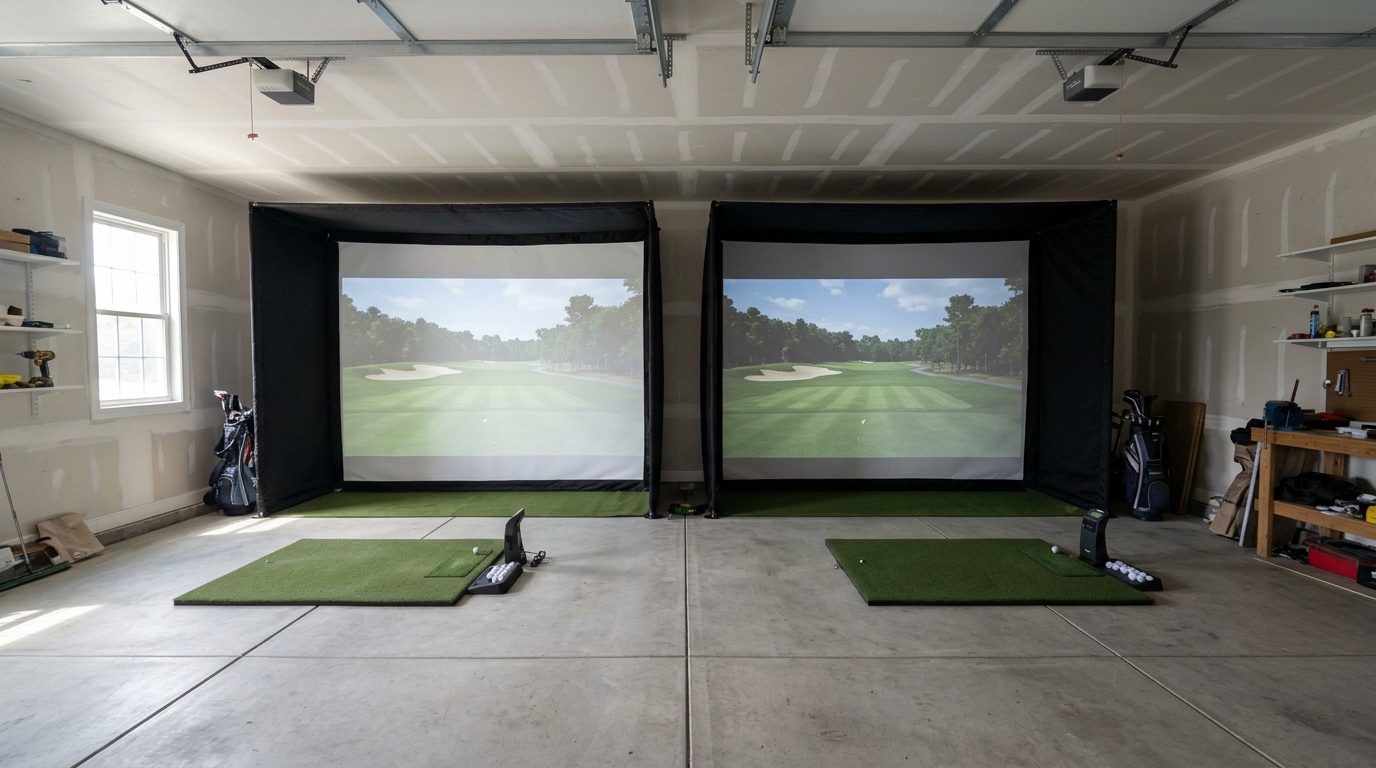
1. SIGPRO Premium: Best Overall
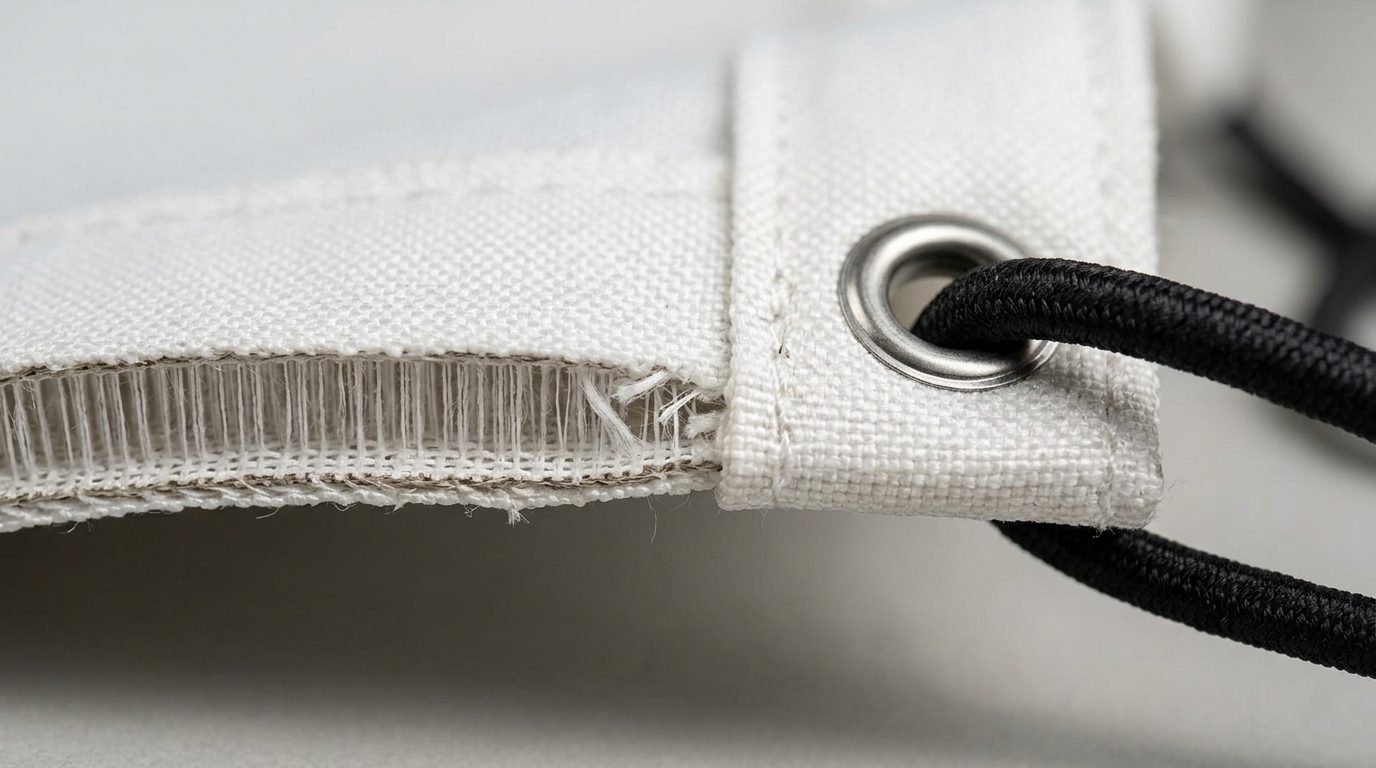
The SIGPRO Premium impact screen uses three layers. Shop Indoor Golf describes two tightly knit polyester faces that sandwich vertical spacer yarns, and says the screen was tested at ball speeds up to 250 mph.
That spacer layer is the reason it ranks first. According to the brand, it lowers ball bounce-back and dampens sound, and the white face is rated for images up to 4K.
The warranty is clear, which is not true of every screen here. Shop Indoor Golf offers a full 1-year residential warranty that covers rips and tears from golf ball strikes. Coverage up to 5 years is available through Mulberry at extra cost, bought with the screen.
Price: the 8' x 10'6" size (the SIG10 enclosure size) is $569.99 regular, on sale for $426.99 at the time of writing during a 25% off Black Friday promotion. The 10' x 10' square is $529.99 regular, $396.99 on sale.
Limits: sizes are built around SIG's own enclosures, so measure your frame before ordering. A 1-year base warranty is shorter than the multi-year cover Rain or Shine claims for its own screen.
Who it's for: most home sim bays with a dark room and a standard 4:3 or square frame. Who should skip it: buyers who want the lowest possible price, or a room with windows and lights you can't turn off.
2. Carl's Place Standard: Best Value
The Carl's Place Standard screen is a white, single-layer screen sold in more than 40 size combinations. At Rain or Shine Golf, the 8 x 10.5 ft size is $239.95 and the 9 x 12 ft size is $274.95 at the time of writing, with no sale price shown.
Carl's Place also sells two step-ups. The Preferred costs $398.95 in 8 x 10.5 ft, and the white triple-layer Premium costs $598.95, with more than 70 size options.
Limits: a single layer has no damping layer, so expect more noise than the triple-layer screens in this list. We could not confirm the warranty term or a ball speed rating on an official Carl's Place page, because the brand's site blocked access when we checked.
Who it's for: first builds on a tight budget, and DIY frames that need an odd size. Who should skip it: anyone in a shared house where sound carries, or anyone who wants a documented warranty before buying.
3. ROS Triple-Layer Impact Screen: Best for Noise and Bounce-Back
Rain or Shine Golf makes the ROS impact screen in the USA from 100% heavy-duty polyester rated to 250 mph. It comes in heights from 7.7 to 10 ft and four aspect ratios (1:1, 4:3, 16:9, 16:10).
The triple-layer version is the one to look at if noise matters. Rain or Shine labels it "Quieter/Less Bounceback" and describes a noise-dampening center layer, and says it is worth the step up for high-swing-speed players.
Price: the 8 x 10.5 ft size is $599 for triple layer or $399 for single layer, and 9 x 12 ft is $649 or $449, with no sale price shown at the time of writing. Screens are made to order in the USA, with a lead time of about 2-3 weeks according to Rain or Shine.
Limits: a comparison table on Rain or Shine's site calls the screen's warranty "in-house multi-year," but neither the product page nor the store's warranty policy page states the term. Get it in writing before you order.
Who it's for: basements under bedrooms, apartments and anyone who wants a softer catch. Who should skip it: buyers who need a screen next week.
4. SIGPRO Premier: Best for Rooms With Ambient Light
The SIGPRO Premier shares the three-layer build of the Premium but uses a gray face. Shop Indoor Golf positions it for rooms with ambient light, where a white screen can look washed out.
Price: the 8' x 10'6" size is $929.99 regular, on sale for $696.99 at the time of writing. The warranty is a 1-year limited residential warranty covering rips and tears from ball strikes.
Limits: it costs about 63% more than the white Premium at sale prices (our calculation). A gray face also asks more of your projector, so pair it with a bright model from our guide to the best projector for golf simulator setups.
Who it's for: garages with windows, finished basements with recessed lights, and rooms where the family watches while you play. Who should skip it: fully dark rooms, where the white Premium does the job for less.
5. HomeCourse ProScreen 180: Best for Small or Shared Rooms
The HomeCourse ProScreen 180 is a ceiling-mounted retractable screen with a battery motor and a wireless remote. It rolls up when you are done, so a garage or a living room can go back to normal use.
Its Pro Arm side netting extends the projectable area up to 14 ft, and the bottom of the screen flexes so the ball rolls back toward you. HomeCourse recommends a space about 8'6" high by 10' wide (10'6" with the Pro Arms out) and 10 to 12 ft from front to back, according to Shop Indoor Golf's listing.
Price: $2,299 regular, on sale for $1,999 at the time of writing, plus $125 for the optional wall mount kit. The 1-year manufacturer warranty covers the motor, Pro Arm netting, sky netting and the screen.
Limits: it is the priciest screen here by far, and it needs a ceiling mount at least 6 inches from the ceiling and 18 inches from the wall. The layer count and ball speed rating were not listed on the page we read.
Who it's for: two-car garages that still park cars, and multi-use rooms. Who should skip it: dedicated sim rooms, where a fixed screen costs far less.
6. The Net Return Simulator Screen: Best for Net Return Owners
The Net Return Simulator Screen is sized to fit The Net Return's own nets and bays. The brand claims "minimal bounce-back" and says the screen absorbs the sound of impact.
Price: the Pro 10 size is $399 regular, on sale for $319.20 during a 20% off Black Friday promotion at the time of writing. The Home size is $239 regular, $191.20 on sale.
Limits: the product page does not state the material, layer count or exact dimensions, so ask for them before you order. Screens are non-returnable, and the warranty is 1 year.
Who it's for: golfers who already own a Net Return net and want to add a projector. Who should skip it: anyone building around a different frame.
How to Choose a Golf Impact Screen
Weave and Layers
Single-layer screens are cheaper, and Rain or Shine labels its single-layer option "Increased Durability." Triple-layer screens add a middle layer that brands say cuts noise and bounce-back.
A tight weave also matters for the picture. Look for a stated image rating (SIGPRO says "up to 4K") if you plan to use a 4K projector.
Noise
No brand in this guide publishes a decibel figure, so compare on build. A triple-layer screen and a gap behind the screen are the two things sellers point to for a quieter impact. Treat those as seller claims, not measured results.
Bounce-Back and Tension
Tension is a trade-off. The Carl's Place care sheet says a more tensioned screen has greater bounce-back but less wear, while a looser screen bounces less but wears faster.
Bungee mounting helps tune this. Rain or Shine says its SwingBay enclosure is tuned for about 5 feet of bounce-back with the included bungees and a 1 inch gap to the frame.
Projection Quality: White or Gray
White screens suit dark rooms and give the brightest image for a given projector. Gray screens like the SIGPRO Premier are sold for rooms with ambient light, but you need enough projector brightness to make up for the darker face.
Size and Aspect Ratio
Match the screen to your frame first, then to your projector. Rain or Shine notes that 4:3 is the most popular ratio because most rooms have the height for golf but not the width for full widescreen.
A native 16:9 projector on a 4:3 screen leaves part of the screen dark unless you adjust the output. For example, a 16:9 image that fills a 10.5 ft wide screen is only about 5.9 ft tall (our calculation), so plan the projector setup before you buy. Some projectors, like the BenQ AH700ST, include an auto screen fit feature for 4:3 and 1:1 screens.
For height, Rain or Shine suggests a 9 ft minimum for a comfortable swing and 10 ft for taller players. Our guide to golf simulator room dimensions covers width and depth.
Frame and Mounting
A screen needs something to hang from: an enclosure kit, a ceiling mount or a DIY frame. If you plan to build one from EMT conduit or wood, our DIY golf simulator build guide walks through it.
Impact Screen Safety Checklist
A golf ball can come back fast, so treat these as minimums from the brands, not suggestions.
- Distance to screen: Carl's Place says to stand at least 10-12 ft from the screen, and Uneekor recommends about 12 ft from tee to screen, with 10 ft as a minimum.
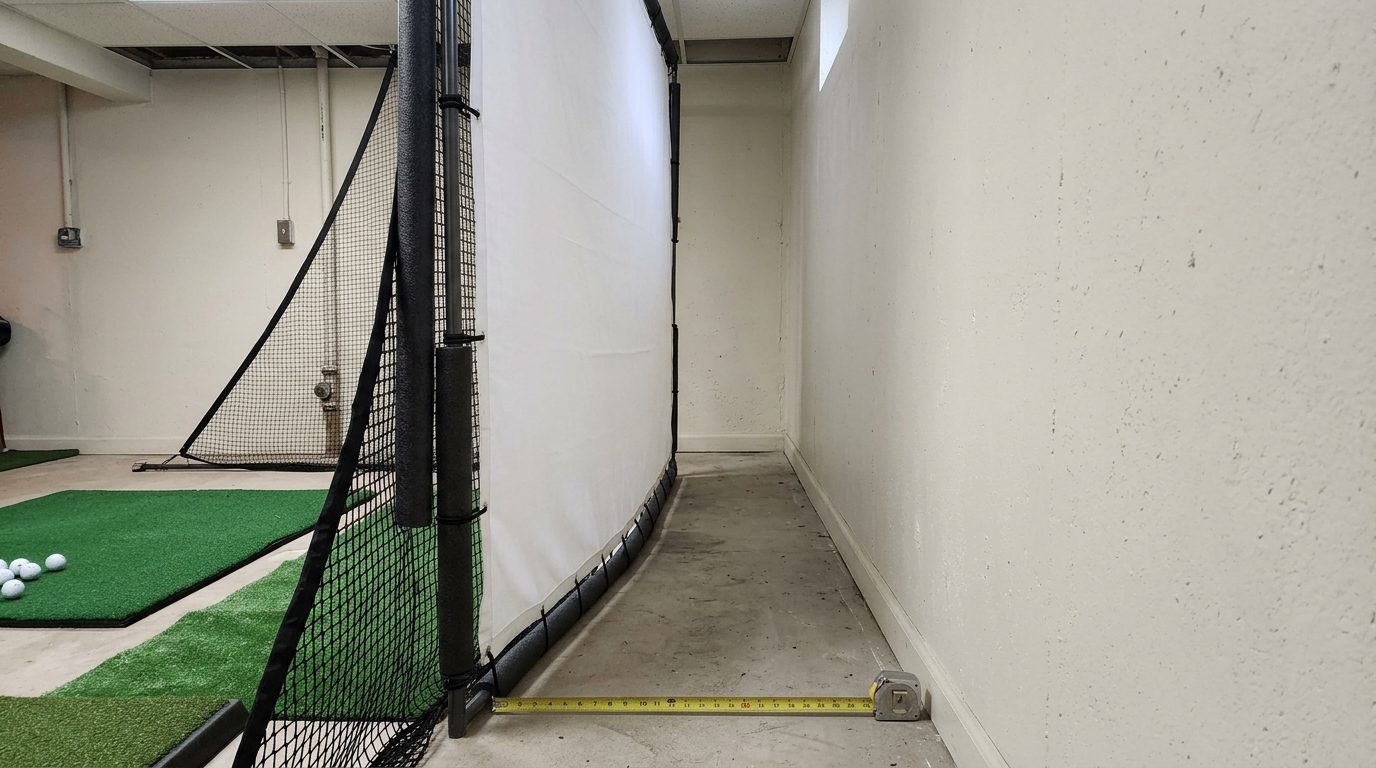
- Gap behind the screen: Shop Indoor Golf suggests hanging the screen 9-12 inches from the rear wall, and Carl's Place says 12-16 inches. Never put anything hard right behind it.
- Protect the edges: Carl's Place warns that balls hitting the grommets directly can damage the edging. Padding on the frame and side netting help with mishits.
- Side and overhead netting: Rain or Shine sells a pair of 10' x 8' side nets for $149 at the time of writing. The store also shows a $199 compare-at price, its own reference figure, so $149 may be a temporary sale.
- Clean balls: Carl's Place recommends new, white balls with no scuffs or marker, and clean clubs, to keep the screen surface clean.
FAQ
What is the best material for a golf impact screen?
Most impact screens are woven or knit polyester. Rain or Shine uses 100% heavy-duty polyester rated to 250 mph, and SIGPRO uses two knit polyester faces around spacer yarns. Pick a screen with a stated ball speed rating and a warranty that covers ball strikes, not a plain projector screen.
How far should you stand from a golf impact screen?
Brands suggest about 10 to 12 feet. Carl's Place says to stand at least 10-12 feet away for safety, and Uneekor recommends 12 feet from tee to screen with 10 feet as a minimum. Standing closer increases bounce-back risk, so plan room depth around that distance.
How much space do you need behind an impact screen?
Leave a gap so the screen can flex without hitting the wall. Shop Indoor Golf suggests 9-12 inches from the rear wall, while Carl's Place says 12-16 inches. Retractable models like the HomeCourse ProScreen 180 need about 18 inches from the wall at the mount.
Is a triple-layer impact screen worth it?
It is worth it if noise or bounce-back is a concern. Brands like Rain or Shine and SIGPRO say the middle layer makes impacts quieter and softer. A single-layer screen costs less, and Rain or Shine labels its own single layer for durability, so it suits garages where sound does not matter.
What size golf impact screen should I get?
Start with your frame or room. The 8 x 10.5 ft (4:3) size is common and fits rooms with a 9 ft ceiling or more. Match the aspect ratio to your projector setup, and check the frame's inside dimensions before ordering a custom size.
Can a golf ball rip an impact screen?
Yes, screens do wear and can tear, especially at the edges. That is why the warranty matters: SIGPRO covers rips and tears from ball strikes for 1 year on residential use. Carl's Place warns that direct hits on grommets can damage the edging, so pad the frame.